How to frame landscape photos
Landscape photos want room to breathe. Choose frames and mounts that echo the horizon, not fight it.
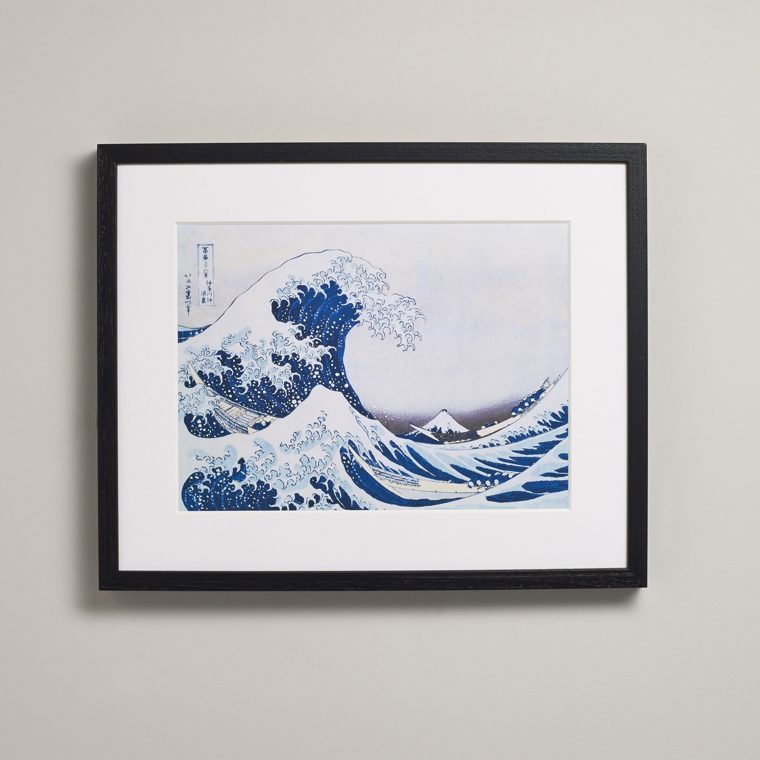
A landscape is mostly open space, and framing either protects that space or eats into it. Narrow mouldings and generous mounts keep the horizon feeling wide; a chunky frame crops the eye in before the image has had a chance to open out.
What a landscape needs from its frame
Landscape photos are built from horizontal lines — horizon, shoreline, tree line — and the frame's job is to reinforce that geometry rather than interrupt it. A narrow moulding, ideally 15–25mm wide, keeps the eye moving across the scene instead of stopping at a thick edge. Generous mounts add breathing room on all sides so the print doesn't feel boxed in, while glazing should stay unobtrusive rather than becoming a feature in its own right. Think of the frame as a window ledge, not a stage set: it should let the light and distance in the photo carry on past the edge of the print.
Choosing the right frame colour
Natural oak or light wood works particularly well on woodland, hillside and countryside shots, echoing the browns and greens already in the image rather than fighting them. White frames suit bright coastal, alpine or summer landscapes with plenty of sky and light stone. Black or dark grey frames give moody, overcast or dramatic scenes — stormy skies, autumn light, black-and-white conversions — more weight and contrast. Gold or antique finishes can work on golden-hour shots with warm amber tones, but use them sparingly, as they can read as ornate if the photo itself is simple.
Quick test: squint at your landscape until the colours blur into two or three blocks — sky, land, water. Whichever tone dominates is the one your frame should answer to; a beach shot that reads mostly pale sand and blue sky usually wants a white or light oak frame, not black.
Mounts and presentation
For most landscape prints, a mount of 20–30mm in Snow White or off-white acid-free board keeps the focus on the view without adding visual clutter. Wider mounts, up to 50–60mm, can work well for large statement pieces destined for a hallway or stairwell, where the extra margin reads as gallery presentation. Panoramic-format landscapes are the exception: a thin 10mm mount, or no mount at all, keeps the sweep of the image unbroken and stops the composition feeling chopped into a smaller window. Whichever width you choose, keep it consistent on all four sides.
Size and proportion
Match the frame to the photo's original aspect ratio rather than forcing it into a square. A 16×9 or 3:2 landscape crop suits most digital camera shots, while true panoramic ratios (2:1 or wider) need a specialist long-format frame rather than an off-the-shelf square one. Cropping a wide view down to fit a standard square frame is the single most common mistake — it usually removes exactly the foreground or sky that gave the photo its scale. If you're unsure, print at the size the composition naturally wants rather than the size that's easiest to buy.
Glazing for protection
Large landscape prints hung in living rooms or hallways benefit from anti-reflective glass, which cuts the glare from windows and overhead lighting that a standard sheet would bounce straight back at the viewer. If the wall gets direct sun for part of the day, add UV-protective museum glazing to stop skies fading to a flat grey-blue and greens turning brittle over a few years. For large-format prints, acrylic glazing is worth considering too — it's lighter and more shatter-resistant than glass, which matters once a print gets much beyond A2 in a lightweight frame.
Common mistakes to avoid
Ornate gold or heavily carved mouldings tend to compete with a simple, quiet landscape rather than complement it — save decorative frames for interiors and still life. Hanging landscape prints too high is just as common: the horizon in the photo should sit roughly at the viewer's eye level, around 145–155cm from the floor to the centre of the print, not the top of a doorway. Skipping a mount to save money on a large print often backfires too, since the image ends up feeling cramped against the frame rather than presented within it.
Frequently asked questions
What frame shape for landscape photos?
Wide rectangular frames in a 3:2 or 16:9 ratio suit most landscape photography straight out of the camera, while true panoramic shots need a custom long-format frame rather than a standard size. Matching the frame to the photo's native ratio means you're not cropping into the sky or foreground just to fit a size on the shelf. If you're unsure of the ratio, measure your print and choose the closest wide format rather than rounding up to a square.
Wood or metal for landscapes?
Natural oak or walnut complements nature scenes particularly well, picking up the browns and greens already present in woodland, hillside and countryside shots. Black metal-look mouldings suit modern, minimalist or architectural landscapes, especially black-and-white or high-contrast urban skylines. White frames sit between the two, working well for bright coastal or snow scenes where you want the frame to disappear against a pale wall.
Should landscapes have a mount?
A mount of 20–30mm in white or off-white board is usually enough to give a standard landscape print breathing room without drawing attention to itself. For true panoramic formats, many people skip the mount altogether, or use a narrow 10mm border, so the image reads as one continuous sweep rather than a window within a window. Larger statement prints for a hallway or stairwell can take a wider mount, up to 50–60mm, for a more gallery-like finish.
Related guides
How to frame panoramic photos • How to create a gallery wall • Which frame material should you choose?
How Emblem Frames helps
At Emblem Frames we remove the guesswork. Upload your photo and our AI analyses colour, subject and mood, then suggests the ideal frame colour, mount and finish. You see a realistic preview before you buy, so you know exactly how it will look on your wall. It’s made-to-order, delivered ready to hang across the UK, with no account needed.