Canvas vs photo framing
Both are beautiful, but they serve different purposes. Choose with confidence.
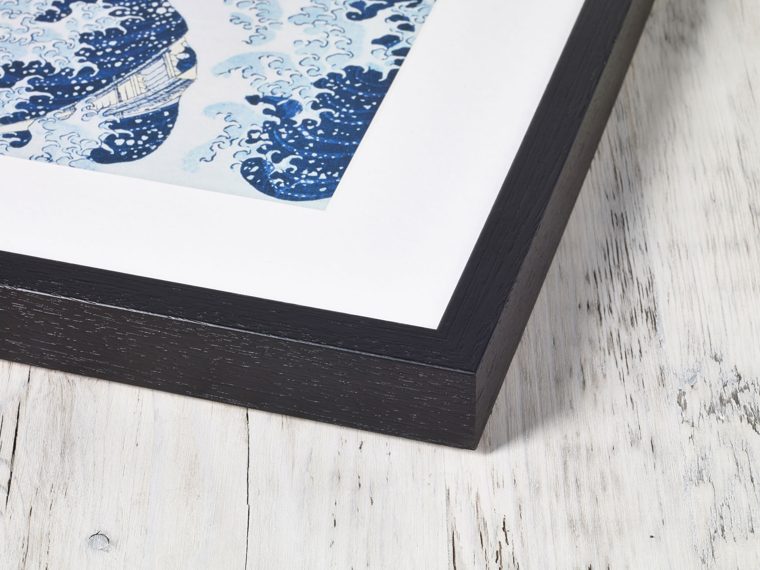
The choice is usually made on looks, but it is really a choice about surface and protection. Canvas is stretched, unglazed and textured; a framed photographic print is flat, sealed behind glazing and far easier to keep clean. Deciding which of those properties matters to you settles the question quickly.
How canvas and framed prints actually differ
Canvas and framed photo prints solve different problems, even when the underlying image is identical. Canvas is printed directly onto a woven, textured surface and then stretched over a wooden frame, so the surface itself has visible weave and slight give when pressed. A framed photographic print, by contrast, starts as a flat giclée print on fine-art paper, then sits behind glazing inside a moulding, which seals and protects it completely. The practical difference is protection versus texture: canvas trades some print sharpness and colour depth for a tactile, painterly surface, while a framed print keeps the image crisp and shields it from dust, moisture and fingerprints.
Quick rule of thumb: if you want to feel the texture of a photo across the room, choose canvas. If you want the sharpest possible detail up close, protected behind glazing, choose a framed giclée print — the two formats solve different problems, not compete for the same one.
Choosing the right frame colour
Canvas is most often displayed completely unframed, with the printed image wrapped around the sides of a deep stretcher bar so the raw wooden edge is visible — no frame colour decision needed at all. Some canvases are floated inside a shallow box frame, usually in black, white or natural oak, which adds a finished edge without covering any of the printed surface. Framed photographic prints, on the other hand, always need a frame, and the same colour rules apply as any other print: black for high contrast, natural oak or white for lighter, brighter images. If you're torn between the two formats, remember that canvas removes the frame-colour decision almost entirely.
Mounts and presentation
Canvas is never mounted — there's no card border, because the printed image is stretched right to the edge of the wooden frame and the sides of the canvas itself become the visible border. A framed photographic print almost always benefits from a mount, typically 30–50mm of white, ivory or warm grey acid-free board, which protects the print's edges and gives it visual breathing room on the wall. This is one of the clearest practical differences between the two: canvas presentation is about the stretched surface itself, while photo framing presentation is built around the mount and glazing sitting on top of the print.
Size and proportion
Canvas can go noticeably larger than a framed print without becoming impractical to hang, because a stretched canvas on a wooden bar is lightweight relative to its size — a 100×70cm canvas weighs a fraction of an equivalent framed and glazed photo print. Large framed prints need heavier mouldings and secure wall fixings simply to support the weight of the glazing and mount board, which limits how big you'd comfortably go before cost and weight both climb. If you want one large statement piece above a sofa or bed, canvas is usually the more practical route; for a considered gallery wall of several smaller images, framed prints are easier to arrange precisely.
Glazing for protection
Canvas is always displayed unglazed — putting glass or acrylic over a textured canvas print flattens the very surface quality that makes canvas distinctive, and creates an odd gap between the glazing and the raised weave underneath. Framed photographic prints need glazing precisely because the surface is flat and unprotected paper; standard glass, anti-reflective glass or acrylic all guard against dust, fingerprints and UV fading in a way canvas simply doesn't require. This is the single biggest practical trade-off between the two formats: canvas offers texture but no protective barrier, while a framed print offers a sealed, easy-to-clean surface at the cost of some tactile depth.
Common mistakes to avoid
Don't try to frame a canvas the way you'd frame a photo print — squeezing a textured, stretched canvas behind glazing and a mount looks awkward and defeats the purpose of choosing canvas in the first place. Never put glass or acrylic directly onto a canvas surface; besides flattening the texture, condensation can form in the gap and cause mould over time. Equally, don't leave a delicate fine-art photo print unglazed and unframed — without protection it will pick up marks, fade unevenly and warp far sooner than either format should. Match the presentation to the material rather than forcing one style onto both.
Frequently asked questions
Should canvas be framed?
Canvas is most often left completely unframed, with the image wrapped around the edges of a deep stretcher bar so no additional frame is needed. Floating a canvas inside a shallow box frame — usually black, white or natural oak — can work well for smaller canvases or a more formal room. Larger canvases are almost always better left unframed, since a frame adds weight and cost without improving the print.
Can you put glass on canvas?
No — glass or acrylic glazing flattens the textured, woven surface that makes canvas prints distinctive, and can trap condensation between the glazing and the canvas over time. Canvas is designed to be displayed without any glazing at all, relying on the printed ink itself for durability. If you want a fully protected, sealed print, choose a framed photo print instead.
Canvas vs photo framing?
Canvas is textured, stretched and displayed unglazed, giving a tactile, painterly finish that suits large, bold images. Framed photo printing keeps the print flat and seals it behind glazing with a mount, protecting the surface and giving crisper detail up close. Choose canvas for scale and texture, and a framed print when you want maximum sharpness and protection.
Related guides
Which frame material should you choose? • How to frame portrait photos • How to frame landscape photos
How Emblem Frames helps
At Emblem Frames we remove the guesswork. Upload your photo and our AI analyses colour, subject and mood, then suggests the ideal frame colour, mount and finish. You see a realistic preview before you buy, so you know exactly how it will look on your wall. It’s made-to-order, delivered ready to hang across the UK, with no account needed.