How to frame children’s art beautifully
Art made by little hands deserves to be displayed with care, not covered up.
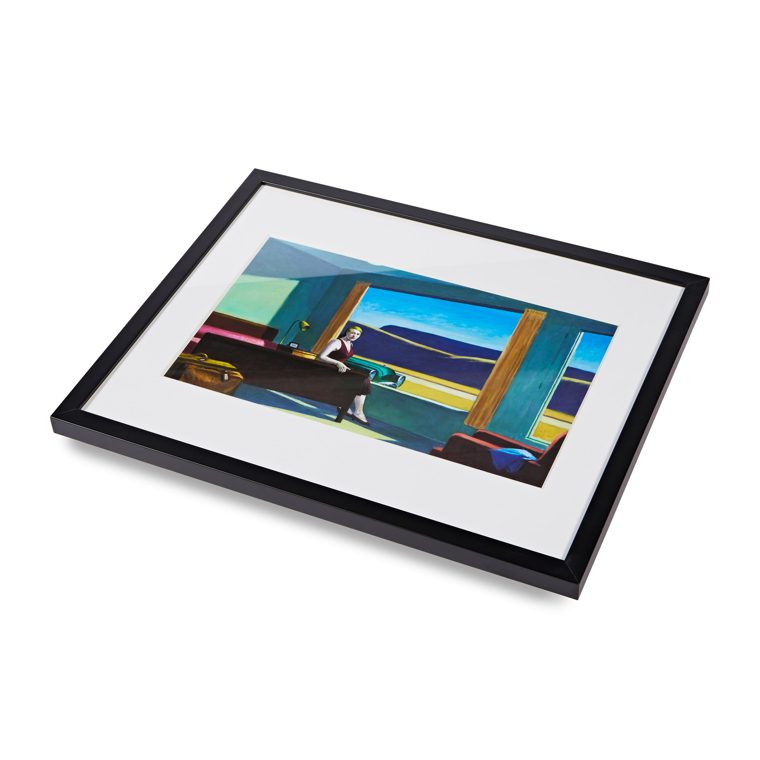
Children’s work arrives on sugar paper and newsprint, sometimes with glitter still attached — materials never intended to last. It also arrives constantly, so any framing system has to be easy to change. Both facts point away from expensive one-off framing and towards something you can open and reload in a minute.
Why children’s art needs a different approach
Children's art arrives constantly and on materials never built to last — sugar paper, newsprint, glued-on glitter and paint that's still slightly damp when it comes home from nursery. That combination means a framing system built for one precious, permanent piece doesn't fit; you need something you can open, swap and reload in a couple of minutes without tools. It also means protection matters more than presentation — the goal is to stop fragile paper tearing or fading, not to make the drawing feel like a museum piece. A simple, reusable frame with an easy-open back solves both problems at once.
Choosing the right frame colour
Bright white or natural wood frames feel fresh and playful, and — just as importantly — they don't compete with the bold, often chaotic colour palettes children use. A light frame keeps the artwork as the clear focus, whereas a black or dark frame can make a busy, colourful drawing feel heavier than it needs to. Natural oak works particularly well in a playroom or kitchen, adding warmth without introducing a strong colour of its own. If you're rotating pieces often, stick to one frame colour across the set so you're only ever swapping the artwork, not the whole display.
Mounts and presentation
White mounts with a wide border — 40mm or more — do real protective work here, holding the artwork away from the frame's inner edge so uneven, torn or slightly warped paper doesn't touch the glazing. Acid-free mount board is worth insisting on, since ordinary board yellows and can leave brown staining on the back of a drawing within a year or two, especially with paint or glue involved. A wide mount also has the side benefit of making a small, simple drawing look considered and gallery-worthy rather than like a piece of homework pinned up. Cream or ivory mounts can work too, but pure white is the most forgiving against bright children's colours.
Keep one frame permanently on the wall with an easy-open back — a clip frame or a box frame with a spring-loaded backboard — and treat it as the rotating slot for whatever's just come home from school, rather than buying a new frame for every piece.
Size and proportion
The simplest approach is to frame close to the exact size of the artwork plus a small border, rather than buying one large frame and hoping everything fits — most children's drawings are done on standard paper sizes, so this is easier than it sounds. For A4 drawings, a 13×11in frame with a 40mm mount works well and leaves enough space for the mount to do its protective job without dwarfing the piece. Smaller scrap-paper pieces or handprints suit an 8×6in or 10×8in frame instead. Keeping one or two standard sizes across your collection makes swapping artwork in and out far quicker.
Glazing for protection
Non-glare acrylic is close to essential for children's art: it's shatterproof, which matters in a playroom or bedroom where a frame might get knocked, and it's significantly lighter than glass, reducing strain on wall fixings in a room with lots of frames. It also reduces reflections on textured drawings — thick paint, crayon or collage work — that would otherwise catch the light under standard glass. Ordinary glass is best avoided altogether in children's spaces, both for the injury risk if it breaks and because it scratches more easily during the frequent opening and reloading this kind of frame goes through. Look for acrylic specifically marketed as non-glare rather than standard clear acrylic.
Common mistakes to avoid
Don't use cheap standard glass in a frame that's going to be opened and refilled every few weeks — it scratches, chips at the corners, and is genuinely risky if a young child is nearby when it's being swapped. Avoid framing every single piece that comes home; most families end up with far more art than wall space, and a constantly growing gallery becomes visual clutter rather than a celebration. Instead, rotate a small, changing selection and store the rest flat in an acid-free folder or box, away from damp and direct sunlight. Skipping acid-free mount board is another false economy — it causes visible yellowing and staining within a year.
Frequently asked questions
How to frame children’s art safely?
Use non-glare acrylic rather than glass, since it's shatter-resistant and safer in a playroom or bedroom, and it also reduces reflections on textured drawings. Pair it with acid-free mount board to prevent yellowing and staining on paper that's often thin or already fragile. An easy-open frame back also matters, since children's art needs swapping far more often than most framed prints.
Should I mount children’s drawings?
Yes — a wide white mount, 40mm or more, protects the uneven edges of children's paper and stops it touching the glazing. It also gives even a simple drawing a genuine gallery finish rather than looking like it's just been pinned up. Always use acid-free board, since ordinary mount board can yellow and stain the artwork within a year or two.
How often to rotate art?
Rotate every few months to keep the display feeling fresh and to limit how long any single piece spends exposed to light, which causes fading over time. Store the pieces you take down flat, in an acid-free folder or box, rather than rolled or stacked loosely. This also solves the practical problem of children producing far more art than most homes have wall space for.
Related guides
How to create a gallery wall • How to frame mixed media and art prints • How to hang frames correctly
How Emblem Frames helps
At Emblem Frames we remove the guesswork. Upload your photo and our AI analyses colour, subject and mood, then suggests the ideal frame colour, mount and finish. You see a realistic preview before you buy, so you know exactly how it will look on your wall. It’s made-to-order, delivered ready to hang across the UK, with no account needed.