How to frame panoramic photos
Panoramas want to stretch across your wall. Here’s how to frame them correctly.
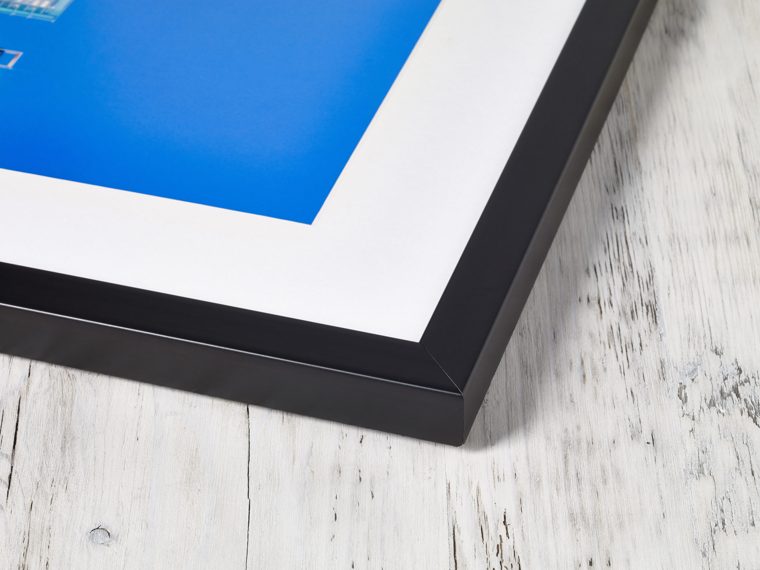
Panoramic ratios fall outside every standard frame size, so off-the-shelf options run out almost immediately. They also need a long, uninterrupted stretch of wall: a panorama squeezed between a door and a bookcase loses the sweep that made it worth printing.
Why panoramas are awkward to frame
Panoramic ratios — anything from 2:1 up to 4:1 or wider — fall well outside standard photo frame sizes, which are almost all built around 4:3, 3:2 or square proportions. That means off-the-shelf panoramic frames run out fast, and a made-to-measure or custom long-format frame is often the only realistic option once you're past the handful of common panoramic print sizes. The other constraint is the wall itself: a panorama needs a genuinely long, uninterrupted stretch of space to read properly, ideally at least 1.5 times the width of the print clear on either side, or the sweep that made it worth printing gets lost between furniture and doorframes.
Choosing the right frame colour
Thin black metal-look mouldings work well for panoramic landscapes and cityscapes, keeping the eye on the width of the view rather than drawing it to the frame's edge. Natural oak or light wood suits panoramic shots of countryside, coastline or mountains, echoing the tones already in the scene without adding weight to a long, thin format. White frames are worth considering for bright panoramic shots of snow, sand or pale architecture, where a dark frame would create too much visual weight relative to the image's height. Whichever colour you choose, keep the moulding narrow — a wide frame on a panoramic print exaggerates its already unusual proportions.
Before ordering a custom panoramic frame, tape a paper mock-up of the finished size to the wall for a day or two. It's the easiest way to confirm the wall has enough uninterrupted width for the sweep of the image to actually read.
Mounts and presentation
Minimal mounting is usually the right call for panoramic prints, since the format is already unusual and a wide mount adds height without adding to the width, throwing the proportions off further. A thin 10–20mm mount, or no mount at all, keeps the image reading as one continuous sweep rather than a picture within a picture. If you do want a mount, keep it the same narrow width on all sides rather than varying it, since any asymmetry is far more noticeable on a long, thin format than on a standard rectangular print.
Size and proportion
Frame to the photo's native aspect ratio rather than a rounded-off standard size — a genuine panorama might be 3:1 or wider, and forcing it into a 16:9 frame means cropping either end of the image. Custom panoramic frames are made to the print's actual dimensions, commonly anywhere from 30cm up to well over a metre wide, so measure your final print size before ordering rather than working backwards from a stock frame size. If your composition sits closer to 16:9, a standard wide frame will fit without a custom order; anything wider genuinely needs a bespoke size.
Glazing for protection
Anti-reflective glass is particularly worth it on panoramic prints because the extra width means more of the print catches light and reflections from windows or ceiling lights at different angles as you walk past. Acrylic glazing is also worth considering for larger panoramic pieces, since it's significantly lighter than glass of the same size and reduces the load on wall fixings across a long, thin frame. Add UV-protective glazing if the piece will hang somewhere that gets direct sun for part of the day, since panoramic prints of skies and open landscapes are especially prone to visible fading over a few years.
Common mistakes to avoid
Cropping a panoramic image to fit a standard frame size defeats the point of shooting or printing panoramically in the first place — it's worth ordering a custom size rather than losing the edges of the view. Hanging too high is just as common a mistake with panoramas as with any landscape shot: keep the horizon at eye level, roughly 145–155cm from the floor to the centre of the print. Finally, don't underestimate the wall space needed — measure the full width plus at least 15–20cm of clear space on either side before committing to a spot.
Frequently asked questions
What frame shape for panoramic photos?
Wide rectangular frames work if your image sits close to a 16:9 ratio, but a genuine panorama — anything from 2:1 upwards — usually needs a custom long-format frame made to the print's actual dimensions. Standard off-the-shelf sizes rarely cover true panoramic ratios, so measure your final print size before ordering. Matching the frame to the native ratio avoids cropping either end of the image just to fit a stock size.
Do panoramic photos need a mount?
Minimal mounting, or no mount at all, usually works best, since a wide mount adds height without adding width and throws off the print's already unusual proportions. Where a mount is used, a thin 10–20mm border kept consistent on all sides is enough to add a little breathing room without breaking the sweep of the image. The wider the panorama, the more a mount tends to work against it rather than for it.
How to hang a panoramic photo?
Centre the print at eye level, with the horizon sitting roughly 145–155cm from the floor, and make sure the wall has at least 15–20cm of clear space on either side so the sweep of the image doesn't feel cramped between furniture or doorways. Use a spirit level rather than eyeballing it — a panorama makes even a slight tilt far more obvious than a standard rectangular print would. Leave the full width measured and confirmed on the wall before the frame arrives, not after.
Related guides
How to frame landscape photos • How to create a gallery wall • How to frame travel photos
How Emblem Frames helps
At Emblem Frames we remove the guesswork. Upload your photo and our AI analyses colour, subject and mood, then suggests the ideal frame colour, mount and finish. You see a realistic preview before you buy, so you know exactly how it will look on your wall. It’s made-to-order, delivered ready to hang across the UK, with no account needed.