How to frame street photography
Street photography is raw. The frame should frame the edge without softening it.
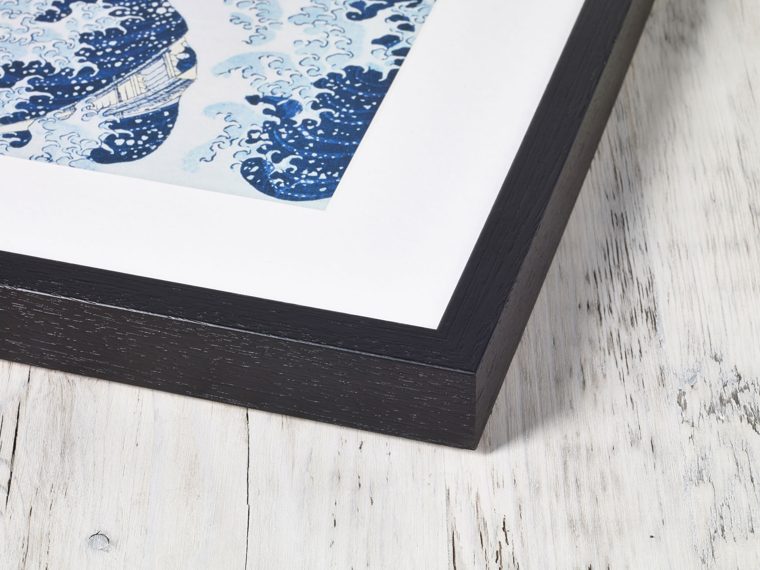
Street photography is about immediacy, and ornate framing reads as a contradiction of it. The usual convention — thin black frame, white mount, nothing else — persists because it stays out of the way and lets a grainy, imperfect, unrepeatable image be exactly that.
Framing street photography honestly
Street photography trades on immediacy — grain, motion blur, an off-centre composition caught in half a second — and framing that tries too hard undoes exactly what makes the image work. The job of the frame is to hold the print flat and protect it, not to add polish it was never meant to have. That’s why the convention of a thin black frame and a plain white mount has stuck for decades across galleries and press archives alike: it’s the framing equivalent of staying quiet. Anything heavier, more decorative or more colourful starts to compete with the photograph rather than support it.
Choosing the right frame colour
Black is the default for good reason: it reads as neutral against almost any tonal range, from blown-out midday contrast to deep shadow, and it’s the colour most associated with documentary and press photography. White frames work when the image itself is dark or moody, giving it a stark, gallery-poster contrast instead. Dark grey is a quieter alternative to black for softer, lower-contrast street work. Avoid natural wood or gold finishes here — warmth and shine both pull attention away from the grit the genre is built on.
Mounts and presentation
A thin white mount, around 40-50mm, is the standard choice — wide enough to give the eye somewhere to rest before it hits the frame, narrow enough that it doesn’t turn into a design feature of its own. Off-white or ivory can work if the print itself has warm tones, but avoid coloured or textured mount board entirely. Plenty of street photographers skip the mount altogether and frame straight to the edge for an even more raw, unfiltered look. Whichever you choose, keep it consistent across a set so the eye reads them as one body of work.
Quick test: hold your street photo at arm’s length and squint. If the frame you’re picturing around it draws your eye before the subject does, it’s too ornate — a thin black frame and a plain mount should disappear the moment you stop looking for them.
Size and proportion
Small to medium formats — 8×10in or 10×12in — suit street photography better than large statement prints, since the genre reads as observational rather than monumental. A grainy, high-contrast frame blown up to 20×16in or larger can start to look like a technical fault rather than a stylistic choice. If you’re building a set, keep every print the same size and orientation where possible; a uniform grid of small black frames reads far more like a considered body of work than a single oversized hero print.
Glazing for protection
Standard glass is perfectly adequate for most street photography, since these prints are rarely precious in the archival sense and are usually replaceable from the original file. Anti-reflective glass is worth the upgrade if the piece will hang in a bright gallery space, a shopfront or opposite a window, since reflections are especially distracting on high-contrast black-and-white work. Acrylic is a sensible swap for a hallway or busy household, since it’s shatter-resistant and lighter to hang in multiples.
Common mistakes to avoid
Avoid ornate, gold or heavily moulded frames — they read as a contradiction against a genre built on unpolished, in-the-moment images. Don’t over-mat a street photograph with a wide 80-100mm mount; it softens the raw edge and makes a gritty image feel formal and precious. Resist the urge to crop tightly to "improve" the composition after the fact — most street photographers deliberately leave the frame loose, and a mount that crops further changes the story of the shot.
Frequently asked questions
Best frame for street photography?
A thin black frame is the safest and most effective choice, since it reads as neutral against almost any tonal range and keeps attention on the image rather than the framing. It also matches the visual language most people already associate with documentary and press photography, so it never looks like a decision at all. White works as an alternative for darker or moodier shots that need a bit of contrast lift.
Should street photos have a mount?
A thin white mount, around 40-50mm, is the standard choice — wide enough to give the eye a rest before it hits the frame, narrow enough to stay out of the way. Plenty of street photographers skip the mount entirely and frame straight to the edge for an even rawer look. Either works; the main rule is to keep it consistent across a whole set.
What size for street photos?
Small to medium formats — 8×10in or 10×12in — suit the genre better than large statement prints, since street photography reads as observational rather than monumental. Blowing a grainy, high-contrast shot up to 20×16in or larger can turn a stylistic choice into something that looks like a technical fault. If you’re building a set, keep every print the same size so it reads as one body of work.
Related guides
How to frame black and white photos • How to frame portrait photos • How to create a gallery wall
How Emblem Frames helps
At Emblem Frames we remove the guesswork. Upload your photo and our AI analyses colour, subject and mood, then suggests the ideal frame colour, mount and finish. You see a realistic preview before you buy, so you know exactly how it will look on your wall. It’s made-to-order, delivered ready to hang across the UK, with no account needed.